Red Dead Redemption Undead Nightmare Pc Download
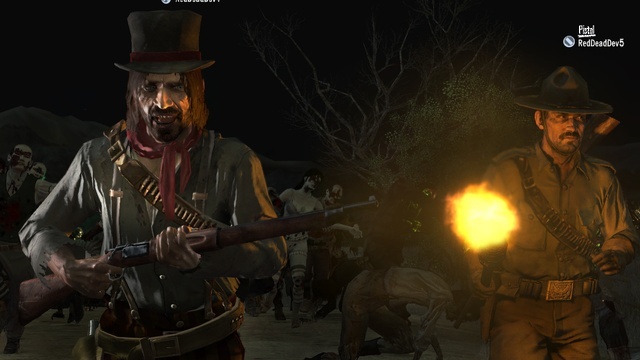
It’s a shame that these moments feel rather numb and unfulfilling alongside ’s harried shoot-outs. Though your enemies will come in different shapes and sizes, they all stumble towards you with the same recklessness, so scoring headshots through Dead Eye is insufferably straightforward. And given that a headshot with any weapon—be it a scrawny pistol or the all-new gut-busting Blunderbuss—will dispose of any zombie, it all but defeats the object of carrying a vast arsenal. ’s most memorable skirmishes relied on cover-based shooting and required the player pick their shots and time their charges forward, while Undead Nightmare is frothing at the mouth with encounters that are far too clumsy and ubiquitously unrewarding.In spite of this, Undead Nightmare is a chance to step into John Marston’s cowboy boots that fans of the series should embrace without question. Even when the zombie infestation has been put to bed, there are a number of loose ends to tie up and ancillary challenges to complete (including the chance to tame the four horses of the apocalypse), as well as a host of revamped online modes. Essentially, though, the absorbing storyline, enchanting vistas, and beguiling characters is the series’s main draw, and on this front Undead Nightmare doesn’t disappoint. John Marston must now surely rank as one of the medium’s most enduring heroes, blessed with an everyman charm and a malleable nature that always convincingly reflects the decisions of the player’s in-game decisions.
In expanding ’s longevity even further, Rockstar have set an unprecedented benchmark for downloadable content and breathed new life into the fabled western gunslinger.Developer: Rockstar San Diego Publisher: Rockstar Games Platform: PlayStation 3 Release Date: October 26, 2010 ESRB: M ESRB Descriptions: Blood and Gore, Intense Violence, Sexual Themes, Strong Language Buy. The opening cinematic for Warhammer: Chaosbane sets the tone for the game that follows. The series of crudely animated storyboard sketches describe a rather generic massive-scale war that’s just been concluded against the forces of Chaos and how your chosen protagonist bravely helped Commander Magnus to victory. What follows isn’t a hack-and-slash dungeon-crawler so much as a hack-and-slack time-killer, one that pales in comparison to the game that Chaosbane fruitlessly emulates: Diablo.Chaosbane’s squandered potential is most evident in how the game mishandles its four selectable characters. Elessa, a wood-elf archer, is meant to use poisons and traps to keep enemies at bay, but those skills are never needed, as the game’s witless AI hordes are only too happy to serve as stationary targets for her arrows.
Red Dead Redemption Undead Nightmare PC Download is an awesome game for PC/Mac.It is a direct link for windows Torrent GOG.This is a crack version of this game.Skidrow Reloaded will provide you this game for free. Overview of Red Dead Redemption Undead Nightmare PC Download 2017. Download this awesome game for you PC/MAC for free.This is an awesome game you can play this. I'm having the same problem. I just downloaded it. At the main menu I press A for single player and it gives me the option for Red Dead Redemption or Undead Nightmare. When I choose undead nightmare it takes me to the downloaded content section. The only thing listed there is the outfit I got for free when I purchased the game. Graphics score reflects how great the visuals are for this pc game. Based on scores by our most trusted members. Please login to add your score for Red Dead Redemption: Undead Nightmare Graphics.
The dwarven Bragi Axebiter uses a chain axe to grapple into foes, since his rage-based mechanic relies upon constantly hitting things, so it’s odd that many dungeons are filled with long, empty corridors that drain his rage meter. Konrad Vollen, a shield-bearing soldier gains extra strength when taunting or being swarmed by enemies, and yet outside of the co-op campaign, he seems rather listless, his status-boosting AOE banners largely going to waste. And then there’s the high-elf mage Elontir, who’s impossibly complicated to handle in the solo campaign. Indeed, the joy of finely controlling his spells is lost in the hectic rush of constantly teleporting away from foes.The first few dungeons showcase Bigben Interactive’s latest at its best, as they at least offer the illusion of depth and variety.
You’ll move from the green-hued sewers beneath Nuln to the ramparts above, and then through the grim, gray-hewn streets of the ravaged fortress city, all the while learning exciting new moves. (Never mind that the characters seem to have inexplicably forgotten all their heroic skills from that introductory cutscene.) But should you decide you don’t like Bragi’s fast-paced dual-wielding axes and want to shift to Konrad’s slower, more methodical sword-and-shield bashing, you’ll have to begin a whole new campaign, and it’s here that the game’s non-randomized levels come dully into view. Even if you never restart and choose to stick with a single character, the rewards are quickly diminishing. You’ll revisit slightly different areas of Nuln’s sewers and streets throughout the first chapter, fighting, for the most part, the same types of monsters: some sort of swarmer, some sort of tank, a ranged unit, and perhaps a mounted creature.
Your hero, limited to a single weapon type, only ever minimally upgrades his or her loot, and of those 14 active abilities and countless passives to equip, only a few builds seem viable or interesting.The game’s main campaign is relentlessly repetitious. Dungeons are straightforward affairs, mostly linear corridors that are occasionally pockmarked with a treasure-filled cul de sac, though they offer no optional objectives or lore. There are no side quests, no interactions with townsfolk, not even a shop. There are only five or six NPCs, all of whom give the same fetch-quest variations, only with slightly different accents, and ultimately, whether they send you to the frosty trees of the Forest of Knives or the floating stone bridges of the Chaos Realm, the result is always exactly the same. While Chaosbane abounds in colorful background details—toothy red maws pressing out of the earth, tentacles flailing far beneath you—the game would have been better served by bringing more hazards to the actual forefront, so as to break up the monotony of just how easy it is to vanquish your enemies.Even the few inventive stretches of the game are ultimately driven into the ground by that sense of repetition. Chaosbane’s four bosses are its strongest feature, given that they possess unique mechanics that you must learn to strategically overcome, from dodging a bullet-hell attack to baiting a laser away from the pillars that you’ll later need as cover.
But replaying these encounters in Boss Rush mode quickly blunts the excitement of learning boss patterns, making these encounters as rote as any other enemy in the game. Increasing the difficulty simply allows enemies to hit harder and absorb more damage, which makes the game longer, not harder, and the post-game Relic Hunt mode’s random enemy modifiers do little to change this.
To put it lightly, it’s a case in which nothing is adventured, and nothing is gained. If “fun” is on one extreme of the video game emotional spectrum, Ice-Pick Lodge’s Pathologic 2 is on the other. It drops you into its setting with a harshness that’s redolent of a season’s first blast of freezing cold.
As that setting, a remote town on the Russian steppe, is ravaged by mass hysteria and plague, you feel desperate and hopeless, struggling against a force you don’t understand and cannot seem to overcome so much as momentarily stave off. Playing Pathologic 2 feels like suffering, and it’s meant to be that way.Despite the number in its title, the game is a partial remake of the cult 2004 original, which featured three playable characters with different yet interconnected stories. As of its initial release, this remake features only one: Artemy Burakh, also known as the Haruspex, a surgeon called back home by his father, a sort of folk healer within the community. For most players, however, experiencing Pathologic 2 once as a single character will be more than enough, given the game’s length and sheer difficulty.
Over the ensuing 12 days, everything in the village goes wrong. Its dubious meat-packing industry halts, the tensions with an indigenous group called the Kin run hot, and a plague fills the air with black particles. People die in the streets, their houses, and the makeshift hospital cobbled together in the theater.
Plague districts are cordoned off and marked by great bonfires. The army arrives, prepared to purge. For this isolated village, it feels like the end of the world, and you feel it in your bones because the game constantly places you on edge through its harsh survival mechanics.Meters for exhaustion, hunger, and thirst tick down every minute of each hellish day, and while there are initially plenty of functional water pumps around town to quench your thirst, the other two meters need to be managed on a constricted schedule and whatever pittance is on hand. If any bar fills, it begins to subtract health. Throughout, you get what you need however you’re willing to get it.
Children, for one, love nuts and sharp objects, so you might trade a pair of broken, rusty scissors and some peanuts for a salted fish to eat (at the cost of thirst), or sell one of three revolver bullets for the coffee beans necessary to stay awake instead of losing a few precious hours sleeping. Perhaps you’ll sully your reputation by cutting out the kidney of a dead mugger to sell for a bandage. Furthermore, plague districts affect an immunity meter that, if you don’t manage it properly, gives way to an infection meter.
Players will have these variables hanging over them as they’re loosed upon the town in first-person perspective. Each new day provides new events, new conversations, and new leads on certain mysteries. On the way to investigate any such points on the map, you must constantly weigh the need to finish certain events before nightfall with the need to manage meters. Is it worth it to take a detour to a shop, to trade with kids playing in a yard, or to root through an abandoned house? After all, the way Pathologic 2 handles failure is harsh, reducing the health meter and occasionally subtracting from other statistics in the event of your extremely likely death, making the next attempt more difficult. And yet the very act of managing those stats or prioritizing certain tasks might also lead to missing others entirely, with resulting consequences.
Other events seem designed only to waste precious time by diverting your attention from other matters, and you’re rarely told which is which.The only thing that significantly hinders the game’s apocalyptic despair is the sense that its difficulties have been tuned a little too sharply. For as much as the game’s survival systems are designed to be overbearing and exhausting, they often feel unnecessarily harsh, somewhere beyond the point that has already been so clearly made. In such moments, you begin to wonder if scavenging wouldn’t still convey a huge amount of stress if food satisfied just a little more of your hunger, and if the meters ticked down just a little more slowly. The developers have promised an option to adjust the difficulty in the future, though in the game’s current state, it’s hard not to wish for a slight loosening of its grip around your throat.All the same, there’s seemingly no “right” way to play Pathologic 2. As these different elements converge, it feels as if a community’s entire being has been crammed into Pathologic 2. You grapple with the town’s economics, keep up relationships, save lives, and peel back what layers of the place’s dark history that you can.
It’s one of the most stunning examples of a game as a cohesive whole, as every aspect is tuned for maximum stress and horror—an atmosphere of imbalance and overhanging dread that’s enhanced by the eerie, ever-clanging score. All the while, the abattoir looms large in the distance, its giant, dripping sacks of meat hanging uselessly on their suspended journey to the station. The doomed wander in full-body canvas cloths tied around them, and strange beings in ghastly crow masks with glowing eyes stand watch.
The town appears lost in an endless ocean of straw-yellow grass. Few games are as transportive as this, and fewer still will leave players so utterly convinced that they never want to see such a place for as long as they live.This game was reviewed using a download code provided by tinyBuild.Developer: Ice-Pick Lodge Publisher: tinyBuild Platform: PC Release Date: May 23, 2019 Buy. The self-professed “fjord noir” whodunit Draugen certainly doesn’t lack for wild ambition. While that can be an invigorating impetus to the artistry behind a video game—or that of any creative work, really—it can also run great ideas into the ground.
And there’s no clearer example of that than the latest from the Oslo-based Red Thread Games. Draugen is clearly mistrustful of its potential, stuffing itself with more and more narrative ideas until it practically asphyxiates, ending up as a sprawling and unresolved mess.The game, though, makes a great first impression with its breathtaking setting and attention to detail. You play as a stodgy American named Edward, languidly rowing a boat along a meandering Norwegian fjord, backdropped by impossibly blue skies and snow-capped mountains.
He’s accompanied by his young ward, Lissie, a boisterous and irreverent teenager who has a penchant for dropping quips and endearing jibes, and much to Edward’s chagrin. All the while, the tranquility of this scene is punctuated by a beautiful and evocative orchestral soundtrack, the melody eventually subsiding as the duo docks at a nearby island.To Edward and Lizzie’s surprise, no one has come to pick them up. The island’s small village seems recently abandoned, almost as if its inhabitants vanished overnight. It’s an impression made all the more eerie by the fact that Edward and Lissie were invited to the remote island by its most prominent family.
And as Lissie tears off toward their host family’s homestead and he trudges after her, Edward can only ponder exactly what’s going on in this place. It’s a picture-perfect setup to a potentially enthralling mystery about the secrets that plague this remote island, except that Edward is troubled by another mystery he’s looking to solve: the disappearance of his long-lost sister, Betty, who he insists has been leaving him clues to her whereabouts. But the inquisitive Lissie, who very much has the moxie of a budding detective, picks up his slack, jumping at every opportunity to learn more about the island’s secrets, even egging Edward on with her unbridled enthusiasm and imagination.Throughout, Edward is able to search his surroundings for clues to his host family’s whereabouts, with prompts tagged to specific items around the island and inside the family’s house, leading him to make more logical conclusions than those of his more instinctually driven companion. At its strongest, Draugen spins colorful banter from the collision of Edward and Lissie’s disparate approaches to investigation. Lissie, for one, is prone to pulling nonsensical theories out of nowhere, and the contrast between her youthful exuberance and his reserved demeanor feels natural and lived in—until it suddenly isn’t.Draugen’s sense of atmosphere is rich enough to keep one riveted for two thirds of its campaign, but then the developers spring on us a narrative curveball that effectively kills their game’s momentum.
And things go downhill from there. Twist after twist is introduced without seeming rhyme or reason, almost all of them completely untethered from the mystery behind the island. After a while, Draugen completely buckles under the weight of one too many revelations, which mostly revolve around Edward’s deteriorating mental state—a plotline so astonishingly convoluted that it raises more questions than it answers. Moreover, the game forsakes worldbuilding as it increasingly gives itself over to making the most digressive of statements, which includes poking at the fallacies of the very detective genre to which Draguen belongs. This is most apparent in how Edward, in a moment of exasperation, tells Lissie that delving into the island’s mystery is a colossal waste of time, hollering at her, “This isn’t Agatha Christie.
There won’t be a convenient set of clues leading to a tidy conclusion.” And Draugen seems only too happy to heed his words, given how many stones it infuriatingly leaves unturned. By the end, the impression that lingers most is that Red Thread Games didn’t have much of an endgame planned out in advance aside from wanting to leave players feeling as if all their detective work was for nothing.This game was reviewed using a download code provided by Evolve PR.Developer: Red Thread Games Publisher: Red Thread Games Platform: PC Release Date: May 29, 2019 Buy. The droll wit of Void Bastards is baked into the game’s very premise: A transport spaceship bearing an assortment of freeze-dried prisoners (more room that way) is stranded in a particularly nasty nebula.
There, pirates roam, monsters devour ships, and all the unfortunate citizens have been bizarrely mutated into murderous, foul-mouthed horrors. Once rehydrated, prisoners are shooed out into this unforgiving corner of space to scavenge derelict ships for parts until their probable death, after which the next unfortunate soul indicted for a comedically pedantic crime (having too many teabags, entering an office after business hours) continues the work. The gears of capitalism turn even in these ruins of bureaucratic failure, a sprawl of files and forms and insidiously softened terminology from which the prisoners (who are referred to as “clients”) may cobble together the tools to return home, where things probably aren’t all that different anyway.As setups go, it’s a cheeky, immaculate framing device for a roguelike, which typically deals in randomized levels, permanent character deaths, and accumulable items. It contextualizes its inherently morbid repetition as, in the terms of this pencil-pushing dystopia, “expendable” prison labor, which allows Void Bastards to start shifting variables as early as the start of every attempt. Since each prisoner is a distinct entity, each comes with randomized traits, like being short (meaning they don’t need to crouch and are harder to hit) or never being attacked by one specific type of mutant. Others might smoke and therefore cough every so often, or shout in joy every time they pick up an item, both of which will alert nearby enemies to their position.Such interactions between different variables, even as small as the way incidental noises affect stealth, typify the other genre that developer Blue Manchu patterns Void Bastards after: the immersive sim. In the image of System Shock, BioShock, and even the recent, you have a variety of options to survive your first-person scavenging.
Whether you favor stealth, traps, or running and gunning, the goal is to potentially take advantage of all the different systems at work. You can lock mutants in a room with a cluster bomb, or perhaps get creative with the Rifter, which warps an enemy out of existence until you bring them back in whatever location you wish. But those same systems can also work against you. For one, a ship with sporadic power outages might mean, at the worst possible moment, that you need to take a detour and give the generator a good kick. Both the roguelike and immersive sim are predicated on happy accidents, unexpected consequences, and the adaptation necessitated by both. Void Bastards does, though, dramatically simplify the scavenging process to encourage a more frenetic style of play. Rather than fiddle with an inventory screen, prisoners vacuum up every single item inside green storage containers, which are marked on the minimap when you’re in range.
This shift turns each excursion into more of an actual run, where you’re skating down metallic corridors, popping open containers, and blasting (or fleeing from) any enemies in the way. From there, the game piles on additional pressure points, like a limited oxygen supply or rifts that endlessly spawn enemies. You can certainly mitigate most of these risks—lock the doors to the rift, visit the oxygen resupply room if there is one—but it will take time, oxygen, and perhaps health if you run into, say, a powerful gun turret on the way.These scenarios can even create further complications.
What if the rift spouting nasty conglomerates of floating heads is in the oxygen room? The game is successfully designed to force you into split-second decisions and rethink your strategies, given the way its different systems interact in pressure-mounting ways. That said, the game doesn’t eliminate the immersive sim’s more meditative qualities so much as shift them to a separate planning stage.
Prior to boarding a derelict vessel, you’re given a detailed readout of what to expect and allowed to choose equipment accordingly. It tells you enemy types and the quantity of each, what resources are plentiful, and what complications will arise, like power outages or radiation leaks.
You even get a map of the ship in question, with items logically distributed among the named rooms; food, as you might imagine, is most plentiful in the dining hall.The amount of forethought the game affords you is rare among roguelikes, which tend to introduce things by surprise. It imbues Void Bastards with a greater sense of consequence since you’re not at the mercy of randomization so much as your ability to plan and execute, as well as knowing when to retreat or when to avoid a ship entirely. An ideal run of Void Bastards is about planning, going on a run, and then having your plans upended by any of the different variables at work, requiring you to quickly adapt while coming up with a new plan. However, this also means that Void Bastards is at its weakest when everything hums along smoothly. The game features a variety of absurd, amusing weapons and its distinctive comic-book art style is pleasing to look at, but a glut of smooth, uncomplicated runs can grow monotonous. The amount of strategy it affords you somewhat hinders its ability to tempt you off the path of least resistance, into the unknown and the sense of discovery that makes both roguelikes and immersive sims truly shine. But beyond this issue, what makes Void Bastards so thrilling is exactly what elevates other great nontraditional roguelikes like and: for fitting together disparate genres, in this case the roguelike and the immersive sim, so perfectly that you wonder how nobody thought to combine them sooner.This game was reviewed using a download code provided by Humble Bundle.Developer: Blue Manchu Publisher: Humble Bundle Platform: PC Release Date: May 29, 2019 Buy.
The prospect of the widely detested Konami of 2019 turning a jaundiced eye toward the best franchise the beloved Konami of yore produced was, rightfully, a frightening proposition. After all, this is a publisher that’s had no qualms about charging $10 for an extra save slot, or canceling entire games, regardless of positive reception or earning potential, based on a grudge against creators.
Remember that Konani’s last major contribution to the Castlevania series was a pachinko machine. There are countless stories and questions about the creation and advancement of the Castlevania series that remain untold and unanswered—stories you can tell either through the inclusion of the later games that showcase that evolution, or through the inclusion of ancillary materials that tell the story more directly. Many a developer has made that effort in bringing games of this age to modern players. Konami simply doesn’t, and it’s not for a lack of proof to draw from, given how different latter-day titles in this series became in the PlayStation/Nintendo 64 era. There’s an entire thriving genre of video games co-named after this series. That alone is a grand reason to chronicle the how and why of this series’s legacy in thorough detail. Yes, putting the effort in to localize Kid Dracula certainly took work, but it’s also the least relevant game to said chronicle.
This is a collection that feels loveless as a result, as it lacks so much context or respect for the place these games hold in gaming history.Konami—partnered again with developer M2, a studio renowned for their work on similar compilations for Sega and SNK—takes a similarly haphazard approach to the more restorative aspects of this collection. Aside from a manual Quick Save system, a few perfunctory graphics filters, and screen frames, the games are, well, essentially ROM dumps. Thankfully, whatever enmity Konami holds toward its glory days as a developer doesn’t affect the games whatsoever. The meat of the collection is, of course, the NES, SNES, and Genesis titles, which have all held up extraordinarily well to time.
Red Dead Redemption Undead Nightmare Walkthrough
The original Castlevania remains quite difficult, but there’s very little in the game that goes beyond “tough but fair” aside from an infuriating fight with the Grim Reaper toward the end. Simon’s Quest is the most troublesome of the bunch, in that it’s so obtuse in its clues and RPG elements that it’s essentially impossible to progress without the aid of a strategy guide. But it’s also the most academically fascinating game in the collection. Many of its puzzles, designs, and mechanics are easily decades ahead of their time, even if they’re poorly implemented into the game.Dracula’s Curse, Super Castlevania IV, and Bloodlines represent the series hitting a creative stride, the 8-bit Hammer horror trappings of the first two games making way for the series to develop its own identity. Dracula’s Curse and Bloodlines both bring a playfulness and mechanical ambition to the fray. The former does this via a grand experiment with branching paths and character swapping, the latter through a series of hardware-pushing special effects and optical illusions. Despite being a first-generation SNES title, Super Castlevania IV remains one of the system’s crowning achievements, especially in the sound department.
Adventurous beats and melodies give way here to impressive facsimiles of an orchestral experience, featuring haunting choirs, evil organs, and ethereal, synth atmospherics that create a soundscape unlike anything else produced at the time. That, and the game’s organic, painterly aesthetic brings a dose of legitimate unsettling terror and dread far beyond the abstract pixels of the NES games or the bloodier but more cartoonish aesthetic of Bloodlines.It’s not greed in this day and age to expect publishers to respect and preserve their history.
At this point, it’s an artistic responsibility, and for a series as creative and ambitious as Castlevania, simply tossing a few barely touched ROMs at players and calling it a day can’t help but feel a little insulting, all the more so because the games presented in this collection make a rock-solid case that they’ve never been more worthy of the attention. The acting conceit of Layers of Fear 2 presents a compelling psychological dive into what it means to create a character, to truly imagine yourself as someone else.
But each time players might be swept away into something truly unsettling, the director’s demands snap things back to a comfortable reality. For all its unsightly imagery, the overall arc of the game conforms to a familiar structure (especially in the ineffective New Game+ mode), forgetting that its scariest moments are those unexpected ones between the instructions given to you by the director. Layers of Fear 2 can be terrifying, but only when it stops clinging so tightly to its script.This game was reviewed using a download code provided by Evolve PR.Developer: Bloober Team Publisher: Gun Media Release Date: May 28, 2019 Buy. The setting of Observation is the familiar stuff of science fiction: a space station dotted with airlocks and hatches and run by a voice-activated artificial intelligence. But the lens through which it’s viewed is not. You play as S.A.M., the aforementioned AI armed with a battalion of unblinking eyes: the cameras that line every one of the eponymous station’s hallways. Despite his constant watch, something has gone wrong aboard the station.
The Observation has spun far off course, most of its crew is gone, and neither S.A.M. Emma Fisher, who appears to be the station’s only survivor, know what happened.Besides observing, most of S.A.M.’s functions are doled out piecemeal for the exclusive task of progressing through the guided storyline. He can access things like laptops and terminals.
He can open (and close) doors, and he can recite whatever data he’s been asked to find by Dr. Fisher to help unravel the mystery behind the station’s crisis. Though sci-fi connoisseurs may already have ideas about where the story will end up, Observation is, despite appearances, less a game about refusing to open the pod bay doors than cooperating with Dr.
Isn’t one to cause problems so much as help solve them by dutifully performing different tasks.If Dr. Fisher needs to broadcast a signal, for example, you’ll need to call up the ship’s map and access cameras in the room housing the astrophysics terminal. From there, you’ll use the terminal to look up the coordinates on a black-and-white image, send those coordinates to the communications screen, and then input the numbers manually.
It’s not glamorous or even particularly challenging work, but neither is being a space station’s artificial intelligence; the game’s most complex tasks involve things like tracing a schematic for clues or piloting one of the spheres floating around the zero-gravity station to reach camera blind spots. As rote and mechanical as these operations may be, they sink you deeper into your role as the AI. The game’s excellent interface design helps you feel at one with the environment through interactions that feel tactile.
Adjusting camera angles is slow and accompanied by a faint hum. Spheres are likely to bump into objects since they’re a little unwieldy and don’t turn on a dime, and their camera view fizzles accordingly. Various text displays don’t look friendly, as a smartphone display might, so much as functional.
They’re rendered in stark reds, whites, greens, and grays that evoke old technology—the loud clacking of keyboards, of numbers not entered so much as forcibly pressed in. The station isn’t exactlys old-fashioned, but its occasionally clunky software feels rooted in a tangible past, as if modernization has yet to erase the vestiges of technology conceived near the turn of the century.And yet, playing as a computer isn’t the same as feeling like one. Engaging with the game means navigating its menus and devices by lumbering through human thought processes, relying on the inefficient motor functions of sausagey fingers mashing on controllers and keyboards. When moving inside a sphere, the labyrinthine station can be confusing to navigate without stopping to check a map, making it easy to float off down the wrong hallway.To compensate for player awkwardness, Observation specifies that S.A.M. Is too damaged to operate at full capacity, but it’s not quite enough to maintain the illusion. No machines ask you to interact quickly or skirt around a fail state. While this gentleness keeps the game humming along smoothly without constantly stopping to chastise players, it makes what are ostensibly the routines of a computer feel built to accommodate humans’ comparative sluggishness, preventing you from fully inhabiting a believable role.
Frantic characters simply stand and stare while they wait for you to complete even the most time-consuming of tasks. But the player’s presence isn’t a total loss since it gives the story room for subtlety. The development of S.A.M.’s emotions is understated and even totally peripheral to the central mystery because your personal reactions to characters, the solutions you uncover, and the attachments you develop stand in for what S.A.M. Your emotions are his. As the plot escalates and the suspense grows, the momentum may slow as you fiddle with a door switch, but it never stops to explain character growth because you fill in the blanks yourself. S.A.M.’s development is almost taken for granted, allowed simply to be as a part of a larger story and compelling mystery buoyed by a unique perspective. There’s a ghost growing inside S.A.M.’s mechanical shell, and after just a few hours with Observation, it turns out to be you.This game was reviewed using a download code provided by Tinsley PR.Developer: No Code Publisher: Devolver Digital Platform: PlayStation 4 Release Date: May 21, 2019 Buy.
The first was released back in 2011, when it seemed like every game was painted in washed-out browns and grays—a visual shorthand for a world in ruin. Weirder and wilder out of the gate, Rage 2 is certainly more varied in that regard, with lush vegetation and advancements in Wasteland technology bringing modern and bracing fluorescent green and yellow glows to its environment, making for a much more colorful reality, with a striking pink visual motif cutting through almost every scene like a knife.It’s two decades after the events of the first game, and there’s been enough peace in the post-asteroid-collision world of tomorrow for the Wasteland to develop something resembling an ecosystem capable of supporting life in the long term. And then General Cross makes his grand, violent return, wiping out the Wasteland’s seat of military power and quickly revealing that things haven’t changed as much in this world as its people would like to imagine.There’s quite a bit of interesting world-building going on here, with the gruff warlords, scrappy survivors, and crackpot scientists of the first game joined by a motley transhumanist population that’s evolved into a slapdash DIY iteration of our modern life. Transgender bartenders and store owners are commonplace. Every human with missing limbs or other body parts seems to have their own personal, customized replacements. The larger-than-life characters of the upper-classes range from Desdemonia, a Norma Desmond-esque vamp producing a daily televised deathmatch, to simpering scumbags like Klegg Clayton, who’s like the unholy cross between Kenny Powers and Guy Fieri.
The critical NPCs who hand out the missions that advance the story are simple archetypes—save for one horrifying, Kuato-like living prosthesis—but people under their leadership are anything but.The world of Rage 2 is a grand place to shoot things, but an even better place to simply people-watch for a spell. Strolling into new settlements and meeting these people is the most engaging part of the game, as the post-apocalyptic society feels very well conceptualized and lived-in.
That said, it doesn’t take long after actually getting involved with missions and side quests to realize little has changed about ’s overall gameplay loop. As wonderfully realized as the world is, you only meaningfully interact with it when NPCs have missions to dole out. And those missions almost unilaterally involve driving to a specific place on the map, killing everything that moves, looting the place blind, and moving on.The killing and looting in and of itself isn’t necessarily a detriment. There’s a lot of the same ethos going on here that fueled Id’s reboot from 2016—a game that, for what it’s worth, I’ve come around to since my initial review.
Every gun has a visceral heft and punch to it, bolstered here by a surprisingly vast collection of superpowers and nanomachine-aided combat enhancements. Mechanically, Rage 2 feels more like Crackdown than, well, the Crackdown game we got this year. Missions are rewarding enough where every couple of skirmishes nets you a much-needed upgrade or the materials/currency to purchase or trade for it. It’s become pretty clear in recent years how much we all need to treasure games operating at this level that aren’t abhorrently stingy with immediate gratification. However, is a game content to just let the player plow through hordes of nameless cannon fodder for hours, and little else.
It starts with the protagonist literally pushing character motivation and backstory aside so he can get some killing done. The setup is far more involved in Rage 2, and the world so much bigger, but it’s one that’s littered with distractions from the main quest, and characters whose motivations and problems beg for more nuance than Rage 2 is willing to provide. Roaming from place to place looking for either more things to kill or better, more efficient ways to do it is a huge waste of an interesting world, and if there was any lesson this type of game should have taken from the Fallout series—or, more broadly, from the Mad Max films it’s drawing so much inspiration from—it was telling dozens of tiny interpersonal tales using the deep pool of well-drawn characters at its disposal without sacrificing being a gory shootout in a desolate environment.The actual, spatial waste just compounds the problem. Rage 2 is another in a sad class of open-world games that has trouble filling up that open world, and that’s a bigger problem when gameplay doesn’t meaningfully vary from “kill everything in sight.” There’s plenty of driving to be done, and there are races, just like in the first. There’s also a tidy collection of armored vehicles to try out beyond the APC you get at the game’s start. These are the only activities that significantly stray from the one thing demands from its players.Still, it cannot be understated how good Rage 2 is at that one thing. It’s a game that works wonders in small, appreciable bursts of neon violence, engaging enough to see its comparatively brief story through to its conclusion.
When it’s all over, however, it’s hard not to be disappointed in how little use the Wasteland has for you when you’re not dealing in lead. French video game developer Asobo Studio’s A Plague Tale: Innocence imagines a 14th-century France ravaged by the combined horrors of the Hundred Years’ War and the Black Plague. After witnessing the murder of their parents by religious fanatics, Amicia De Rune and her sickly younger brother, Hugo, escape their family’s affluent estate, trying to avoid being caught in the machinery of the Inquisition.
What follows is a visually impressive third-person adventure game that’s focused to an almost stubborn degree on the extent to which these two young children must stealthily evade their foes, not least of which the swarms of flesh-hungry rats that have overrun the country almost as a matter of course.Light itself is the star of A Plague Tale, as the rats that emerge from the underground will swarm and consume any living being that doesn’t remain shrouded in light. Throughout, Amicia can use lit torches to safely walk past the ghoulish critters, but these burn out, as well as draw attention from Inquisition knights. Luckily for her, she also has a slingshot at her disposal. This instrument of destruction—and distraction—is your weapon of choice at the start of the game. With it, you can use rocks to knock lanterns from your enemies’ hands, or extinguish their torches, leaving them helpless to the hungry rodents that maddeningly linger in an area. Each scenario is presented as a puzzle where the objective is to figure out how to lure enemies to a certain spot so that they can meet their certain doom.These sequences are consistently varied, with new tools introduced across the game, such as chemicals that can be used to lure rats away from Amicia and toward your human foes.
Likewise, searchlights set up by the Inquisition to provide safe pathways can be moved by the player to plunge enemies into the fatal darkness, and provide new trails for Amicia and her brother to safely traverse. And using these varied gameplay mechanisms in tandem elicits satisfying results, especially when you’re trying to overcome the unusually strong AI, which doesn’t give up as easily as enemies in similar stealth action games like Metal Gear Solid. Being spotted by the guards who patrol an area will almost always seal your fate, as the guards will relentlessly give chase, and groups of them will work together and cover escape routes to enclose Amicia, as well as call out your position to long-range enemies, such as archers. It’s a dynamic game of cat and mouse, and there’s pleasure to be had in trying to figure out how best to take advantage of A Plague Tale’s core gameplay in order to ensure your survival.It’s unlikely that players have come across adversaries in a video game as squirm-inducing as A Plague Tale’s rodent swarms. Their movements are realistic, and especially horrifying as the rats overpower their prey in a blood-crazed frenzy, their beady little eyes just barely reflecting the light coming from some nearby object. No less detail-rich are the dilapidated castles and plague-ridden villages you come across that conjure a tense atmosphere that rarely lets up throughout the game.
Inside abandoned homes, walls are caked with grime and blood, harrowingly evoking the violence that transpired there, while exterior ruins are cloaked in darkness and fog that obscures all sorts of horrors contained within. It doesn’t help that A Plague Tale’s protagonists are also flimsily characterized, barely inviting the player’s emotional investment. A late-game chapter that takes place in Amicia’s head lifts more than one sequence from the Silent Hill series’s unnerving Nowhere, but it doesn’t land with any real effectiveness because the girl’s trauma still feels alien to us by that point. Indeed, by the narrative’s conclusion, the player will have spent over a dozen hours with the girl but still know little about her as a person. This is especially unfortunate given that Amicia comes across a few potential romantic partners and personal adversaries across her journey. Just as it seems as if A Plague Tale is about to fully open the door on a personal reckoning for the girl, it quickly closes it shut, ensuring that she remains a cipher.Nothing in A Plague Tale, though, is as ineffective as Hugo’s characterization.
Red Dead Redemption Undead Nightmare Dlc
The child’s behavior seems to pivot on a dime, either exhibiting the bearing of a helpless innocent or the wisdom of an old sage. In one scene, he throws a tantrum over the loss of family members; then, not long after, he bemoans how characters lie to him and refuse to trust him with information. Despite being terrifically voice-acted, Amicia and Hugo rarely exhibit the sort of conduct that realistically syncs up with their ages. And after a while, their lack of response to the horrors that befall so many innocent people in their midst comes to feel weirdly aloof. Of course, that flaw might be more accurately understood as the result of programming work that was less devoted to character work than making sure that the sights and sounds of rats tearing into human flesh struck the deepest of nerves.This game was reviewed using a download code provided by Evolve PR. You might have to think back to your childhood to remember the mystery, even magic, of a plain box, as it seemed anything could be inside of it, or that it could be imagineered into just about anything.

This, perhaps, explains the unlikely triumph of the minimalist BoxBoy! Series, a hybrid platformer-puzzler from HAL Laboratory that arrives on the Nintendo Switch with the release of BoxBoy! If the game’s largely black-and-white levels—with a few splashes of color to call out helpful switches or dangerous electrical traps—don’t try to awe players with fancy graphics, that’s because their gameplay is more than enough. There are over 270 levels here, and it’s to the credit of the consistently creative design of BoxBoy! That said gameplay, which consists of variations on stacking chains of boxes together so as to traverse obstacles, almost always holds up.To those who’ve played any of the prior BoxBoy! Titles, the first third of BoxBoy!
Is a little repetitive. In these early, solo levels, players are reintroduced to the way in which Qbby (or his be-ribboned pal Qucy) can break the rules regarding the conservation of mass energy. Qbby can generate up to six additional Qbby-sized boxes, which he can then carry or throw so as to create bridges, staircases, ladders, and so on.
The obstacles he needs to contend with are also largely familiar: moving platforms, switches that need to be pressed, lasers that have be to blocked. Gradually, however, Qbby’s moveset expands, past the returning Up Hook (by which Qbby can retract through his boxchain so as to slither from point A to point B), to new skills, like being able to butt-slam stacks of blocks down through solid objects, or sliding your shapes from wall to wall, as if playing a horizontal game of Tetris.These skills are further tested by the co-op campaign—the series’s first. As in BoxBoxBoy!, this allows for two distinct sets of boxes to be placed simultaneously (if one character tries to generate a second chain, the first disappears).
More so, it allows characters to use one another as boxes, or to carry one another, jumping in tandem to reach new heights. (Rest assured, too, that this mode isn’t boxed off from solo puzzlers; it just requires players to do a lot of manual swapping between roles.) As a further bonus, the game also includes a third full campaign featuring a rectangular box, Qudy, who can generate either 2×1 blocks or 1×2 blocks, depending on whether he’s standing upright or bowed at a 90-degree angle. That said, BoxBoy! Is clearly geared toward young players, so expect a lightweight experience. That fact is readily apparent from the goofy four-panel comics that you can unlock with the medals you earn from clearing levels. Checkpoints are generous, and as no puzzle takes longer than 30 seconds to complete (once you know what you’re doing), there are none of the gauntlet-like dexterity tests so often found in other platformers.
You can even use in-game currency to purchase visual hints in the middle of a puzzle, or to pick up assist items that allow you to move faster, jump higher, generate extra boxes, or become invincible. Though laudable that HAL Laboratory has ensured that anyone can beat the game, it’s frustrating that there are few ways in which to increase the challenge, beyond collecting optional crowns. You can also optimize the number of boxes used and try to cut down on the time spent clearing an area, but these are just additional hoops, not harder content.This relative lack of challenge is compounded by the way the game’s difficulty is designed to reset with each new world. World 13, which introduces drill blocks that can be snagged by your own boxchain, gets increasingly complex across its seven levels, but it’s no harder than World 9, which offers seven levels focused on an exclusive warp portal gimmick. It’s not until the appropriately titled “The Last World” that you get to combine various mechanics, and even then, only two at a time.
HAL Laboratory is leaving a slew of underutilized concepts on the table, and BoxBoy! Is crying out for a Super Mario Maker-like level designer that would allow players to pick up those boxes and run wild with creativity.This game was reviewed using a download code provided by Golin.

Red Dead Redemption Undead Nightmare PC Download is an awesome game for PC/Mac.It is a direct link for windows Torrent GOG.This is a crack version of this game. Skidrow Reloaded will provide you this game for free.